Episode 18 – The Price of Profit. Can financial markets deliver a sustainable future?

Episode 18 – The Price of Profit. Can financial markets deliver a sustainable future?

The Sustainable Law Podcast

If you work in the legal sector and you have an interest in tackling the climate and biodiversity crises then this podcast is for you. How do these challenges affect law firms and what can lawyers to take positive action on climate change for their firms and their clients?

Episode 18 - The Price of Profit. Can financial markets deliver a sustainable future?

by The Sustainable Law Podcast

The Price of Profit. Can financial markets deliver a sustainable future?

Does the financial system have the tools and incentives to help tackle the climate crisis? Or is its focus on short-term returns preventing investments that will build a sustainable future? In this episode, Amanda Carpenter and Zoe Leventhal KC explore these questions with Ido Eisenberg, Head of Responsible Investment at Quilter. Ido explains why conventional investment models struggle to account for climate risk, how environmental costs are often miscalculated by investment models, and why leaving the transition to market forces alone is unlikely to deliver the change needed.
The conversation is a vital one for lawyers looking to use their professional influence to challenge misleading information and help drive systemic change.


About our guest:
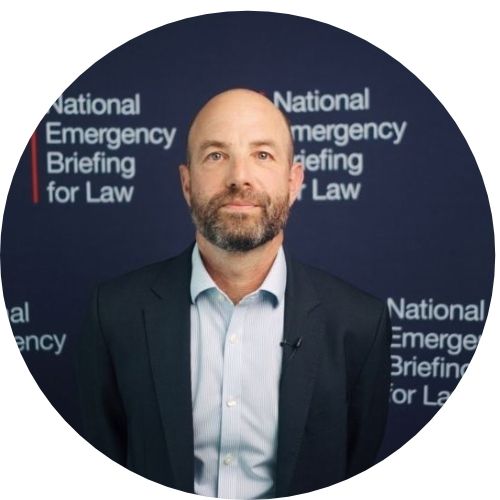
Ido Eisenberg
Head of Responsible Investment at Quilter
Ido Eisenberg has more than 20 years’ experience in investment management and sustainability. He is Head of Responsible Investment at Quilter, where he leads the development and implementation of the firm’s approach to sustainable investing. Prior to joining Quilter, he advised asset and wealth managers on sustainable finance and regulation, and spent nearly two decades as an equity investor at J.P. Morgan Asset Management.
Episode 17 – Fuelling Climate Change – Behind the politics and economics of the energy transition

Episode 17 – Fuelling Climate Change – Behind the politics and economics of the energy transition

The Sustainable Law Podcast

If you work in the legal sector and you have an interest in tackling the climate and biodiversity crises then this podcast is for you. How do these challenges affect law firms and what can lawyers to take positive action on climate change for their firms and their clients?

Episode 17 - Fuelling Climate Change - Behind the politics and economics of the energy transition

by The Sustainable Law Podcast

Fuelling Climate Change – Behind the politics and economics of the energy transition

Historically, the UK has been a global leader on climate action, setting ambitious targets and building momentum for the action needed to tackle the climate crisis. Yet the UK remains the second-largest producer of oil and gas in Europe. With the development of the Rosebank and Jackdaw oil and gas fields under consideration, yet widely contested, the UK stands at a crossroads.

Why is the energy transition so critical to meeting our climate goals? What would a fair energy transition look like — and how can we avoid the long-lasting social and economic impacts experienced during the transition away from coal? Who should bear the costs of the transition?

Can the shift renewable energy reinvigorate the UK’s manufacturing industry while avoiding rises in costs? And what can lawyers do to support this transition, even if they are not directly involved in relevant litigation or ESG practices?
Join us for a deep dive into the future of energy in the UK.

About our guest:

Tessa Khan, Executive Director of Uplift and Energy Transition Expert
Tessa Khan is a lawyer and campaigner and the founder and Executive Director of Uplift, an organisation that works towards a just transition away from oil and gas in the UK. Before founding Uplift, she was co-founder and Co-Director of the Climate Litigation Network, which supports strategic litigation around the world.
Episode 16 – Can We Weather the Storm?

Episode 16 – Can We Weather the Storm?

The Sustainable Law Podcast

If you work in the legal sector and you have an interest in tackling the climate and biodiversity crises then this podcast is for you. How do these challenges affect law firms and what can lawyers to take positive action on climate change for their firms and their clients?

Episode 16 – Can We Weather the Storm?

by The Sustainable Law Podcast

Can We Weather the Storm?

We spoke to Hayley Fowler, Professor of Climate Change at Newcastle University, about extreme weather: what is driving it and how we can respond at both government and individual level? What is El Nino and how will it impact us? Are governments doing enough in the face of expert warnings? What can we learn from other countries as they adapt to increasingly extreme weather? What are the benefits of risk mitigation in our cities? And why should the weather forecast matter to business and law firms in particular?

About our guest:

Professor Hayley Fowler 
Professor of Climate Change Impacts at Newcastle University
 
Hayley Fowler is one of the UK’s leading experts on extreme rainfall and flooding. Her research advances understanding of how precipitation extremes are changing in a warming world and develops improved projections to guide climate adaptation. Hayley was recently awarded the prestigious Royal Society Faraday Discovery Fellowship for “exceptional mid-career research leaders” to further her work on extreme weather. 
Episode 15 – Climate Risk and National Security – Why Climate and Nature Matter in a Resilient Nation

Episode 15 – Climate Risk and National Security – Why Climate and Nature Matter in a Resilient Nation

The Sustainable Law Podcast

If you work in the legal sector and you have an interest in tackling the climate and biodiversity crises then this podcast is for you. How do these challenges affect law firms and what can lawyers to take positive action on climate change for their firms and their clients?

Episode 15 – Climate Risk and National Security: Why Climate and Nature Matter in a Resilient Nation

by The Sustainable Law Podcast

Climate Risk and National Security: Why Climate and Nature Matter in a Resilient Nation

We are living through the most volatile period in recent history and climate change poses an existential risk not just to our planet but to our national security. In this deep dive podcast with Lieutenant General Richard Nugee CB CVO CBE, a member of the newly launched Expert Task Force on Climate Security, we ask: are the military seeing risks that the government is ignoring ? What would it take to bring climate security into joined-up thinking at ministerial level, and what are the consequences if we fail to meet the challenges ahead? Join us for this wide ranging conversation in which  we explore the threats, how prepared we really are, and why and how climate change should be at the heart of the national security conversation.

About our guest:

Lieutenant General Richard Nugee CB CVO CBE is a former senior British Army officer and leading voice on climate and national security. His 35-year military career included operational tours in Northern Ireland, the Balkans, Iraq and Afghanistan, where he served as Chief of Staff to NATO’s ISAF Joint Command. He later became Chief of Defence People and was awarded the US Legion of Merit.

Episode 14 – The National Emergency Briefing for Law – How It Began

Episode 14 – The National Emergency Briefing for Law – How It Began

The Sustainable Law Podcast

If you work in the legal sector and you have an interest in tackling the climate and biodiversity crises then this podcast is for you. How do these challenges affect law firms and what can lawyers to take positive action on climate change for their firms and their clients?

Episode 14 – The National Emergency Briefing for Law - How it Began

by The Sustainable Law Podcast

The National Emergency Briefing for Law – How it Began

Why did two brothers spend their personal fortune briefing MPs and industry leaders about climate change?
 
In this first episode, we speak to Simon Oldridge, who, together with his brother Nick, founded and funded the National Emergency Briefing, which brought more than 1,200 politicians and leaders from business, culture, faith, sport and the media together in Westminster to hear ten leading experts present evidence on climate and nature risks across health, food, national security, the economy, extreme weather and energy.
 
The concept communicated how climate and nature breakdown affects almost every aspect of British life — from food and health to the economy and national security — and challenged decision-makers to respond at the scale the evidence demands. The accompanying film has reached audiences across the country, with more than 2,000 community, workplace and cinema screenings. 

About our guest:

Simon Oldridge is co-founder of the National Emergency Briefing, an initiative bringing leading experts together to communicate the evidence and risks of the climate and nature crisis. A former business consultant with Ernst & Young and CEO of a major UK roof-tile manufacturer, Simon now focuses on climate and nature communication and science-led action. He has also worked on the cross-party Climate & Nature Bill campaign, helping brief politicians on the science. Together with his brother Nick, he founded the National Emergency Briefing to address the gap between the scientific evidence and public and political understanding of the crisis.

Episode 13 – Urgent and Existential Threat – has the ICJ Advisory Opinion changed the legal landscape?

Episode 13 – Urgent and Existential Threat – has the ICJ Advisory Opinion changed the legal landscape?

The Sustainable Law Podcast

If you work in the legal sector and you have an interest in tackling the climate and biodiversity crises then this podcast is for you. How do these challenges affect law firms and what can lawyers to take positive action on climate change for their firms and their clients?

Episode 13: Urgent and Existential Threat – has the ICJ Advisory Opinion changed the legal landscape?

by The Sustainable Law Podcast

Urgent and Existential Threat – has the ICJ Advisory Opinion changed the legal landscape?

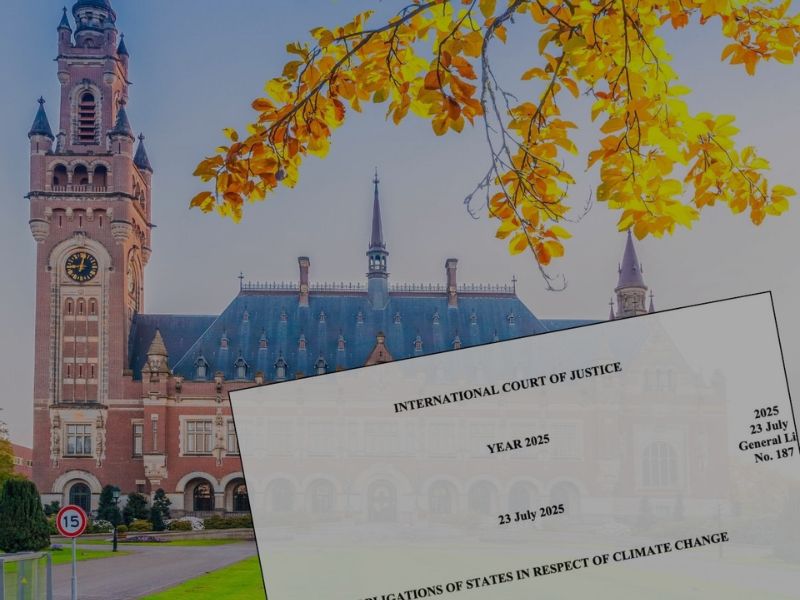
Six months on from the landmark ruling by International Court of Justice which declared climate change “an urgent and existential threat” has anything changed for lawyers, law makers and businesses?

Has this opinion influenced corporate legal practice or shaped decision-making for firms or their clients? What are the due diligence obligations businesses need
to know about, and if the 1.5°C target is increasingly seen as unachievable, how relevant does it remain as a legal and policy benchmark?

In this episode Amanda Carpenter does a dive on the impact of the ruling with guests from both sides of the profession: Estelle Dehon KC, Cornerstone Barristers
and Shane Gleghorn, UK Managing Partner at Taylor Wessing.

More about our guests:

Estelle Dehon KC is a versatile leading public law barrister with a broad practice, specialising in environment and planning law, with particular expertise in climate change, net zero and energy infrastructure. The other main area of her work is data protection and access to information, in which she is again recognised as a leading barrister. She also practices in election law and human rights law and is recognised in administrative and public law. Estelle took silk in 2022 and founded the cross-disciplinary centre of excellence for climate litigation and advice, Cornerstone Climate, in 2023.

Shane Gleghorn is the UK Managing Partner and Global Co-Chair of the board at Taylor Wessing. He is recognised as one of the UK’s premier banking and fraud litigators, specialising in advising major international clients and their senior officers on large-scale litigation, arbitration and regulatory investigations; representing major domestic and international commercial organisations, public companies, State entities and senior executives. He is also Chair of Legal Charter 1.5, a collaborative initiative of leading law firms which aims to shift thinking and drive transformational change to mitigate the climate crisis.