Beyond the Hive: rethinking how we support pollinators
By Aimee Burns, Operational Sustainability Manager, Penningtons Manches Cooper.
Across the legal sector, there has been a growing interest in supporting biodiversity and conservation work, particularly pollinators. For many organisations, installing beehives has become a visible and well-intentioned way to demonstrate environmental commitment. At Penningtons Manches Cooper, we started in a similar place. Like many, we associated honeybees with “doing something positive for nature.” But through our partnership with the Bumblebee Conservation Trust, we’ve come to understand that the picture is more complex and that well-meaning interventions can sometimes have unintended consequences. This article shares a little of that learning journey, with the aim of helping others across the Legal Sustainability Alliance community take the most effective, evidence-based action for pollinators.
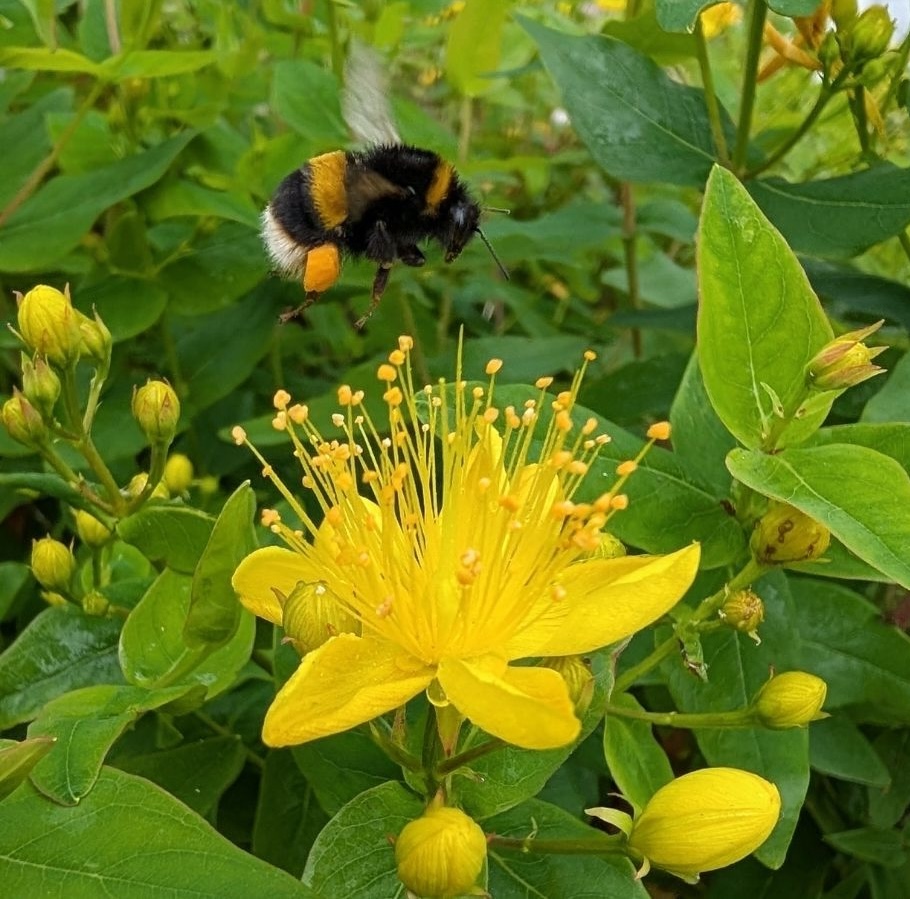
Photo caption: M.Drew
The starting point: good intentions, incomplete picture
Honeybees are often seen as the poster species for pollinator conservation. They’re familiar, recognisable, and their products, particularly honey, create a tangible connection between people and nature. This visibility has contributed to a growing trend in urban environments: installing managed honeybee hives on office rooftops and within corporate estates. However, what we’ve learned, supported by the Trust’s scientific expertise, is that honeybees are not endangered in the UK in the same way that many wild pollinators are. In fact, honeybees are a managed species, with populations actively maintained by beekeepers. The real area of concern lies with wild pollinators, including bumblebees and solitary bees, many of which are in decline due to habitat loss, pesticide use and climate pressures.
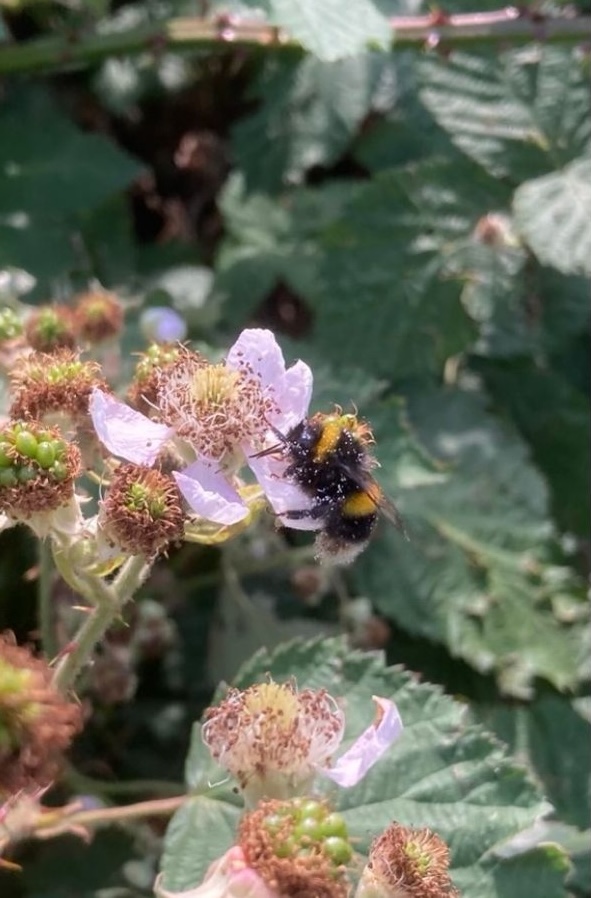
Photo credit: K.Sargeant
What happens when hive densities increase?
One of the most important insights from our work with the Trust relates to competition for food. In urban environments, floral resources such as pollen and nectar are limited. Introducing additional honeybee colonies increases the demand on those resources. Where hive densities are high, this can lead to competition with wild pollinators, including bumblebees. To put this into perspective, a single honeybee hive can require a significant area of forage, the Trust has indicated this can be equivalent to several hectares of flower-rich habitat. In dense cities like London, this level of resource simply isn’t available. The result is that wild species, which are not managed or supplemented, may struggle to access the food they need to survive. Furthermore, honeybee hives can pose additional pressures, as they risk transmitting diseases to wild pollinators. This has been a key moment of reflection for us: recognising that an action widely perceived as “helping nature” may, in some contexts, be contributing to the pressures faced by the very species most in need of support.
The issue of “beewashing”
As awareness grows, so too does the conversation around “beewashing”, in which the use of managed bees, such as honeybees, is portrayed as sustainable action to help biodiversity. There’s no doubt that hive installations can play a role in engagement, education and storytelling. But on their own, they are not a comprehensive or necessarily effective biodiversity strategy. What our partnership with the Trust has highlighted is the importance of shifting the narrative away from single-species interventions and towards ecosystem-based approaches that support a diversity of pollinators.
A strategic decision to support wild pollinators
Through our work with the Trust, we made the decision to focus on habitat creation and improvement. This includes:
- increasing the availability of flower-rich planting throughout the seasons
- prioritising native flowers and drought-resistant species that provide high-quality forage
- creating nesting opportunities for bumblebees and solitary bees
- reducing mowing regimes to allow spaces to flower
- avoiding pesticide use where possible
These actions support a broad range of pollinators, not just honeybees, and help build more resilient urban ecosystems. Importantly, these approaches can be adapted to different scales and settings. Conservation action can begin with simple measures that encourage colleagues to support nature at home, such as creating pollinator-friendly gardens or balcony planting, and extend to wider community spaces, local parklands and larger landscape-scale projects. For organisations that do not directly manage their buildings or grounds, there is also an opportunity to work with landlords and property managers to influence planting schemes, habitat enhancement and land management practices, helping to drive positive outcomes across a wider property portfolio.
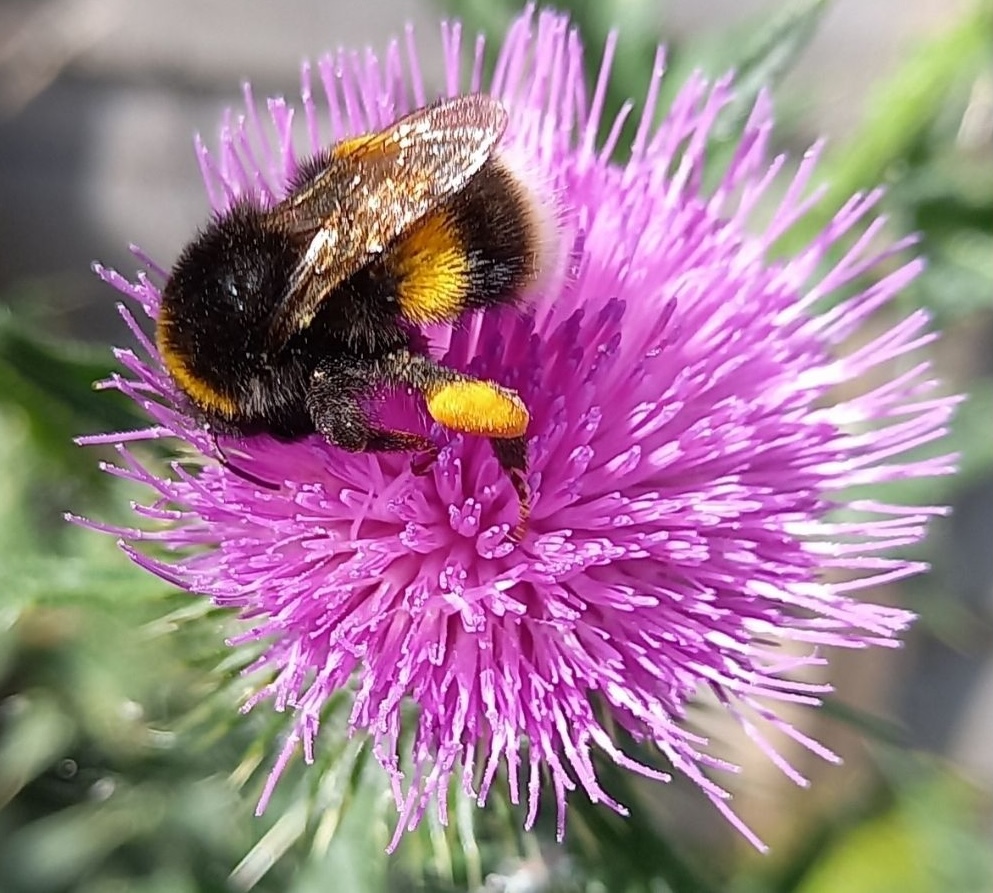
Photo credit: J. Clark
Why this matters for the legal sector
Law firms are uniquely positioned to influence not just their own estates, but also clients, landlords and supply chains. There is a real opportunity for the sector to lead by example, ensuring that biodiversity initiatives are:
- evidence-based
- transparent in their impact
- aligned with recognised ecological guidance
Our experience has shown that even small changes in understanding can lead to more effective decision-making and ultimately, better outcomes for nature.
A shared learning journey
Our five-year partnership with the Bumblebee Conservation Trust specifically supports the Trust’s Buzzing in the East End – Southeast London (B.E.E), which is centred on driving practical, science-led action within South East London and a subsequent later phase in East London. This collaboration has been invaluable in building our understanding of the complexities around pollinator conservation, helping us raise awareness internally and ensuring our approach is better informed by the latest science. One of the most important lessons has been the willingness to question assumptions, particularly where actions are widely accepted as “the right thing to do.” For organisations across the LSA network, this may mean taking a fresh look at existing biodiversity initiatives, asking:
- what impact are we really having?
- are we supporting the species most in need?
- how can we maximise positive outcomes?
These are not always simple questions, but they are essential ones.
Looking ahead
Supporting pollinators remains a critical part of addressing the wider nature and climate crisis. But as our understanding evolves, so too should our approach. By focusing on habitat, biodiversity, and ecosystem health, rather than single interventions, we can ensure that our efforts are both meaningful and effective. We hope that sharing our experience encourages others to explore this topic further and to engage with the growing body of guidance around best practice. The opportunity for the legal sector is clear: to move beyond well-meaning symbolism, and towards impactful, evidence-led action that truly supports nature. Lorna Giffin-Hannan, Business Partnerships Manager at the Bumblebee Conservation Trust, said:
Working with Penningtons Manches Cooper has not only been a brilliant experience for us at the Bumblebee Conservation Trust, but their generosity has also brought direct positive impact to the bumblebees we’re here to fight for. It’s wonderful when a partnership can bring such amazing results, and it just goes to show how a little of the right knowledge can go a long way. We know businesses have the best intentions when they look to introduce hives on their premises, and can often be mortified when they discover it could have the opposite effect. We would urge all firms not to fall into this ‘honey-trap’ and instead have a conversation with us to see how, by working together, we can make a real difference for the bumblebees that enrich our cities, towns, and countryside.
If you’re exploring how best to support pollinators within your organisation, the Bumblebee Conservation Trust offers a range of resources and guidance to help inform next steps.